

Book Online
Please choose which location you would like to make an appointment for.
Blurred distance vision, tired eyes or difficulty reading can be signs that your eyes need help focusing. Refractive conditions affect how light focuses on the retina, the light-sensitive layer at the back of your eye. They include myopia, hyperopia, astigmatism and presbyopia.1
At Innovative Eye Care, our Adelaide and Henley Beach optometrists assess your vision, explain your prescription and help you explore correction options for your daily needs.

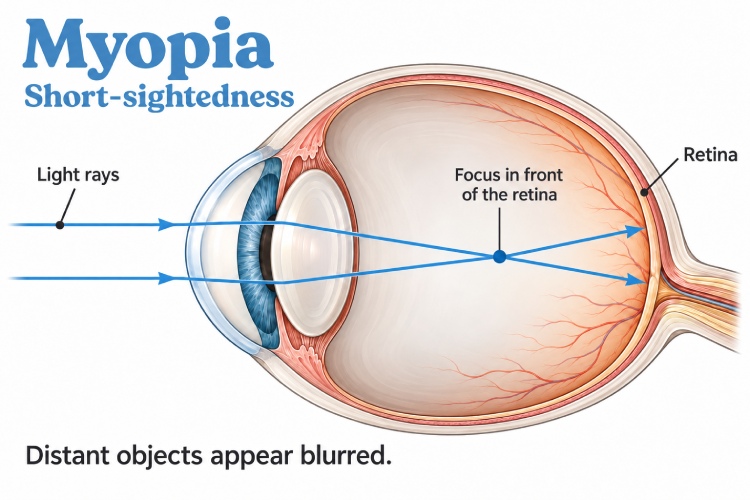
Myopia makes distant objects look blurred. It often develops during childhood, usually because the eye grows too long and light focuses in front of the retina.2
For children, correcting the blur and managing progression are separate goals. Myopia control treatments aim to slow worsening short-sightedness. Benefits, suitability and risks vary between treatments.3
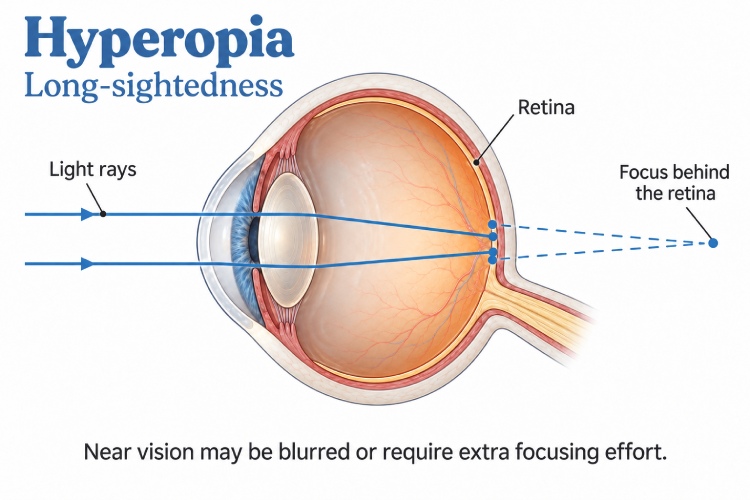
Hyperopia means light would focus behind the retina when the eye is relaxed. It can make close work tiring or blurred and may cause headaches when reading. Mild hyperopia may produce few noticeable symptoms.4
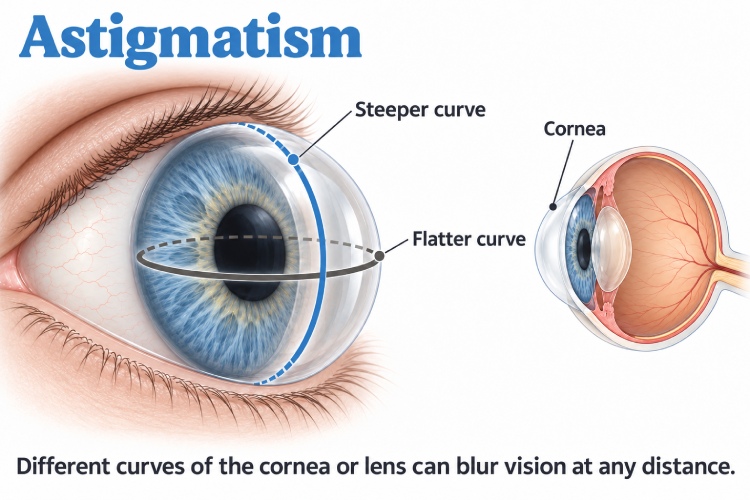
Astigmatism occurs when the cornea, the clear front surface of your eye, or the lens bends light unevenly. Vision may look blurred or distorted at both near and far distances. You can have astigmatism together with myopia or hyperopia.2

Presbyopia is the gradual loss of near focusing ability as the lens inside your eye becomes less flexible with age. You may notice that you hold your phone or reading material further away. It commonly becomes noticeable in your forties.5

An eye examination helps identify a refractive condition and the correction you need.1
At IEC, we discuss your symptoms and visual needs, check distance and near vision, measure your prescription and assess your eye health. We also consider how your eyes work together. Bring your current glasses or contact lenses to your appointment.
Depending on your prescription and needs, correction may include glasses or contact lenses. Surgery may be an option for selected adults. An assessment helps establish which choices are suitable.1
For a child with myopia, ask about management that aims to slow progression as well as provide clear vision. Follow-up remains important because treatment response and side effects vary.3
Speak with our team about your vision and the next step for your care. Visit us at 300 Wakefield Street, Adelaide, or 330 Seaview Road, Henley Beach.
Clinical references for the webpage draft. Citation numbers follow first use. Online sources accessed 30 October 2026.
Book your appointment now for personalised eye care tailored just for you.