

Book Online
Please choose which location you would like to make an appointment for.
Finding it harder to read your phone, a menu or small print? You may be experiencing presbyopia, a normal age-related change in your eyes’ ability to focus up close. It usually becomes noticeable in your 40s. The good news is that reading glasses, multifocal spectacles and contact lenses can help you see comfortably again.1
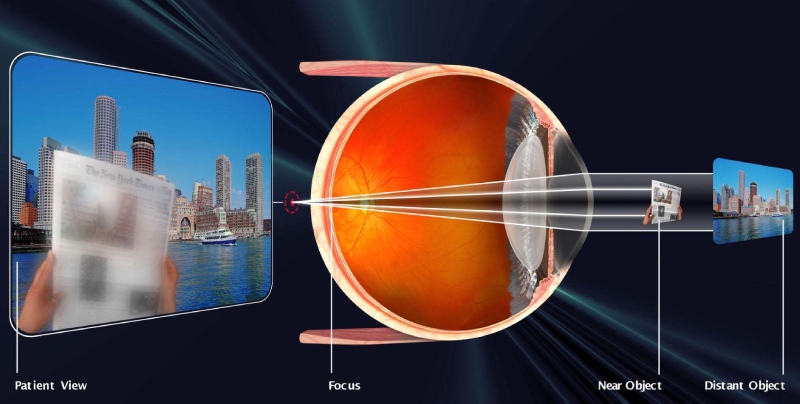

Presbyopia is the gradual loss of close-focusing ability as we age. A flexible lens inside the eye normally changes shape when we look from far away to nearby objects. Over time, this lens becomes less able to change shape, making reading and other close tasks harder.1
Presbyopia is different from long-sightedness (hyperopia), although both can cause near blur. You can develop presbyopia whether you are short-sighted, long-sighted or have always had clear vision.
If you are short-sighted (myopic), you might notice that removing your distance glasses makes reading easier. This happens because your uncorrected focus may sit closer to you. It does not mean presbyopia has been prevented, and your distance vision may still need correcting.
These symptoms can overlap with dry eye and other vision problems. An eye examination can identify the cause rather than assuming every change is due to age.
Many people notice changes between approximately 40 and 50 years of age. Near-focusing ability generally continues to reduce through middle age before becoming more stable later in life. The timing and symptoms vary from person to person.1
Presbyopia can become apparent earlier if you are long-sighted, because you may already need extra focusing effort for close tasks. Changes usually occur gradually, so a sudden loss of vision should not be assumed to be presbyopia.
Your optometrist will check your distance and near vision, measure your glasses prescription and discuss the tasks that matter most to you. Reading a book at 35 cm, working at a computer and viewing a large monitor may all need different lens designs.
A comprehensive eye examination also assesses the health of your eyes and helps distinguish presbyopia from other causes of blurred vision. Learn more about our eye examinations.
Your best option depends on your existing prescription, working distances, hobbies and preference for glasses or contact lenses.
Single-vision reading glasses can provide clear, comfortable vision at a chosen near distance. They are a simple option if you mainly need help with books, paperwork or your phone. They generally need to be removed to see clearly in the distance.
Are ready-made reading glasses suitable? Over-the-counter readers may work for occasional near tasks when both eyes need similar correction and you have no significant astigmatism. A prescribed pair can account for differences between your eyes, astigmatism, and the exact distance of your reading or hobby tasks. Ready-made glasses do not replace a comprehensive eye examination.
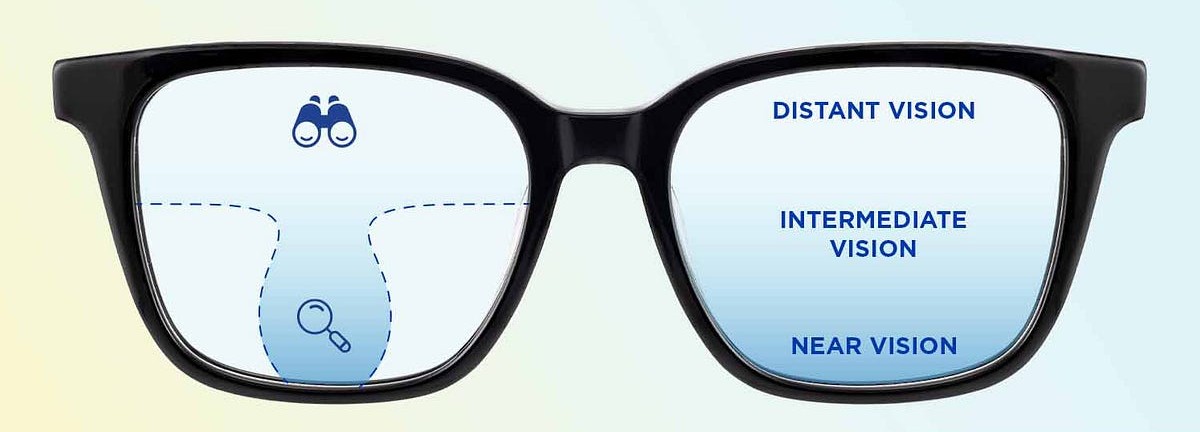
Progressive lenses combine distance, intermediate and near prescriptions in one pair of glasses. They are useful when you regularly move between looking across the room, using a computer and reading. They take some adjustment, and the clear viewing areas can be narrower than in single-vision glasses.
Bifocals and occupational or computer lenses are other options. Occupational lenses can give a wider area for desk work but are not normally suitable for driving. Explore our spectacle lens options.
Which glasses suit which task? Reading glasses are usually best for a book or phone. Computer glasses target the greater distance to a desktop monitor. Occupational lenses may cover several distances around a desk or workspace. Progressives are designed to provide vision across distance, intermediate and near tasks, although the usable viewing areas and adaptation differ by design. Your optometrist can help match the lens to your screen position, occupation and daily activities.

Multifocal contact lenses use different optical zones to support near and distance vision. Monovision is another approach in which one eye is corrected mainly for distance and the other for near. Some people notice reduced crispness, depth perception or night-time visual quality with these approaches, so a personalised trial is valuable.2
Our optometrists can assess whether a contact lens option suits your eyes and lifestyle. Read about our contact lens services.
There can be trade-offs. Multifocal contact lenses may not provide the same sharpness as single-vision correction for every task, particularly in low light. Monovision can affect depth perception for some people. A supervised contact lens trial is a practical way to assess comfort and real-world performance before making a long-term choice.2
Some surgical approaches can reduce dependence on reading glasses, including selected laser vision correction techniques and lens replacement procedures. However, surgery involves trade-offs and risks, and it does not restore the natural flexibility of the ageing lens. These options require specialist assessment.2
Prescription pupil-constricting eye drops have also been studied and are available in some countries. They can temporarily improve near vision for selected people but may cause side effects and are not a permanent cure. Australian availability and suitability must be checked at the time of consultation.3
Presbyopia is part of the natural ageing process, and there is no established way to prevent it. Wearing reading glasses does not make your eyes weaker or speed up presbyopia. An appropriate prescription can make everyday tasks more comfortable.1
Brighter task lighting, larger text and comfortable screen positioning can make reading easier, but they do not restore the lens’s lost flexibility. Eye exercises and supplements have not been shown to reverse presbyopia. The most useful approach is choosing an appropriate optical correction and maintaining routine eye-health checks.
Book an eye examination if you notice persistent near blur, headaches during close work or difficulty using your usual glasses. A sudden change in vision, eye pain, new flashes or a curtain across your vision is not typical of presbyopia and needs prompt assessment.
Seek urgent eye care if blurred vision develops suddenly, particularly with eye pain, a new curtain or shadow in your vision, flashes, or a sudden increase in floaters. Cataracts, dry eye and other eye conditions can also affect vision in midlife, so not every new symptom is explained by presbyopia.4
At Innovative Eye Care, our optometrists assess your vision, eye health and daily viewing needs before recommending glasses or contact lenses. Book an appointment at our Adelaide clinic, 300 Wakefield Street, or Henley Beach clinic, 330 Seaview Road.
To arrange an appointment, contact Innovative Eye Care or call Adelaide on (08) 8231 9341 or Henley Beach on (08) 8445 9050.
Book your appointment now for personalised eye care tailored just for you.