

Book Online
Please choose which location you would like to make an appointment for.
Myopia, also called short-sightedness, causes blurred distance vision. Glasses are one way to correct it, but many people prefer contact lenses for sport, work, driving, social use or day-to-day convenience.
At Innovative Eye Care, we fit contact lenses for myopia at our Adelaide and Henley Beach practices. We offer soft contact lenses, toric contact lenses, multifocal contact lenses, Ortho-K night lenses, rigid gas permeable lenses and specialty lenses for more complex prescriptions.
The best contact lens for myopia depends on your prescription, eye shape, tear film, lifestyle, comfort needs and eye health.
Contact lenses sit on the front surface of the eye and correct the way light focuses inside the eye. In myopia, light focuses in front of the retina rather than directly on it, which makes distance vision blurry.1
Contact lenses for myopia move the focus of light back onto the retina, helping improve distance vision. They can correct mild, moderate and high levels of short-sightedness, depending on the lens type and the health of the eye.
Some contact lenses simply correct vision. Some contact lenses can also help manage myopia progression in children. We discuss both options during your appointment.
Contact lenses may suit people who want:
Contact lenses can also be useful when there is a large difference in prescription between the two eyes. This is because contact lenses can reduce image size differences compared with spectacles.2
Soft contact lenses are the most common type of contact lens. They are flexible, comfortable and available in many prescription ranges.
Soft lenses can be used for:
Soft lenses are available as daily disposable, fortnightly or monthly replacement lenses. Daily disposable lenses are often the most convenient option because you use a fresh lens each day and do not need to clean or store the lenses overnight.
Soft Disposable Contact Lenses

Daily disposable contact lenses are worn once and then thrown away. They are often a good option for people who want simple, hygienic contact lens wear.
They may suit:
Daily disposable lenses reduce the need for lens cases and cleaning solutions. Contact lens case contamination is one known risk factor for contact lens-related complications, so daily disposable wear can simplify safe lens care.3
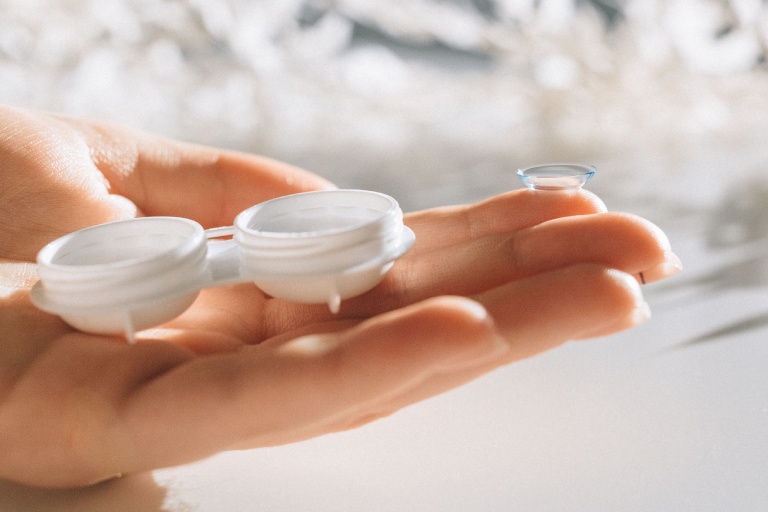
Monthly contact lenses are reused for up to one month, depending on the lens type and wearing schedule. They need cleaning and storage after each wear.
Monthly lenses may suit people who wear contact lenses most days and want a wider range of lens options. Some higher prescriptions, astigmatism prescriptions and multifocal prescriptions are available in monthly lens designs.
Safe cleaning, correct replacement and regular aftercare are important with reusable lenses.

Many people with myopia also have astigmatism. Astigmatism occurs when the front surface of the eye is shaped more like a rugby ball than a soccer ball. It can cause blur, ghosting, shadowing or eyestrain.
Toric contact lenses correct both myopia and astigmatism. They are designed to sit in a stable position on the eye so the astigmatism correction lines up properly.
Toric lenses are available in soft daily disposable, soft monthly, rigid gas permeable and some specialty lens designs.
Myopic adults over 40 may start to notice difficulty reading up close. This is called presbyopia. It happens because the natural lens inside the eye loses flexibility with age.4
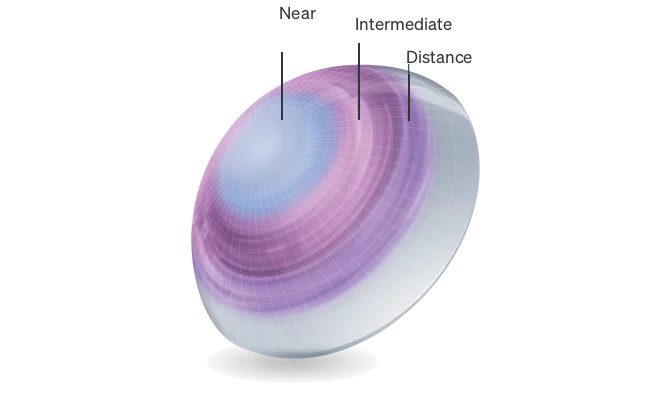
Multifocal contact lenses can help people see at distance and near without needing reading glasses full-time. They may suit myopic adults who want contact lenses for work, social use or sport but also need help with near tasks.
Another option is monovision, where one eye is corrected mainly for distance and the other mainly for near. This can work well for some patients, but it can reduce depth perception in some tasks.5

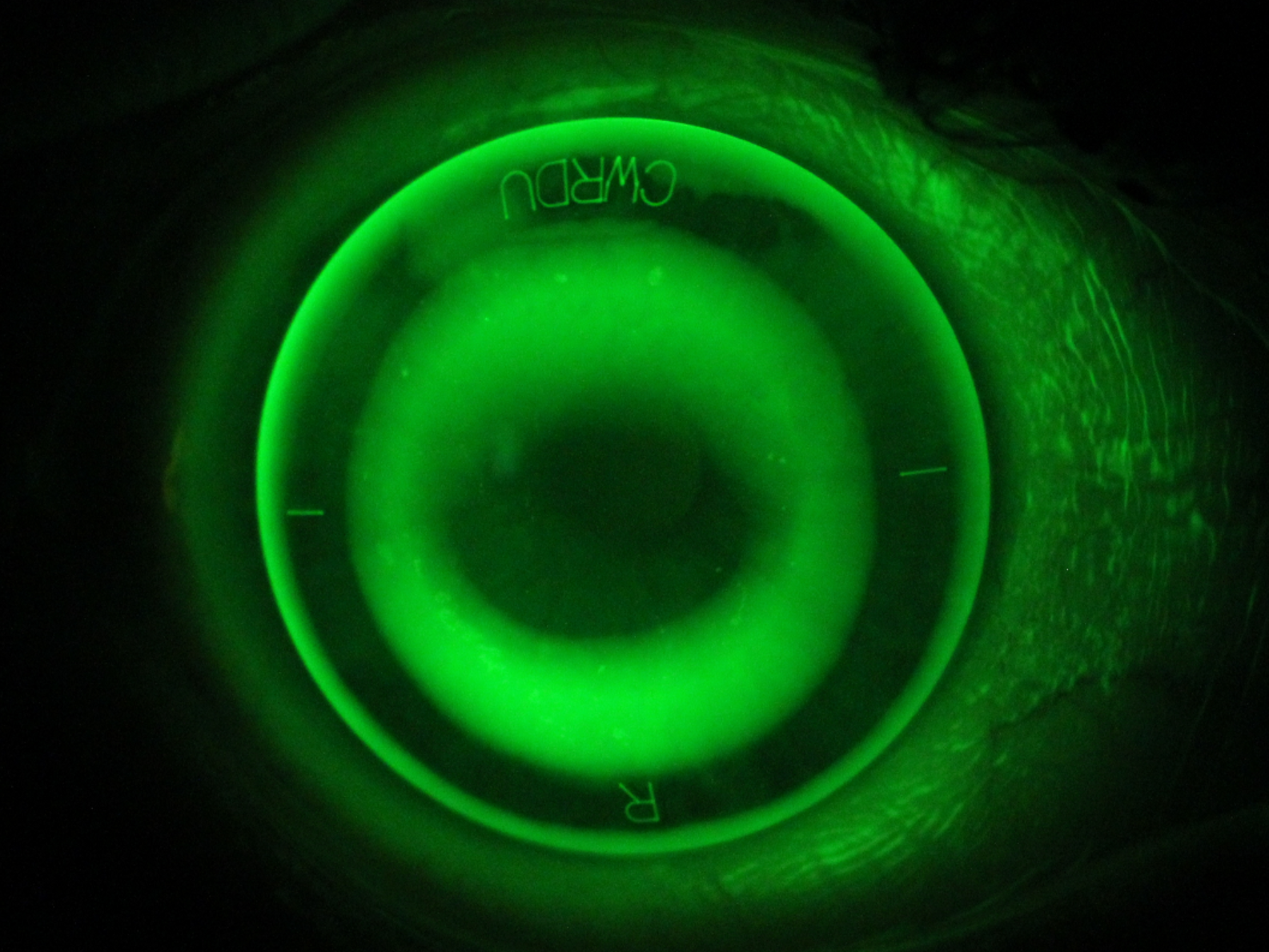
Orthokeratology, also called Ortho-K or night lenses, uses custom rigid lenses worn during sleep. The lenses gently reshape the front surface of the eye overnight. In the morning, you remove the lenses and usually see clearly during the day without glasses or daytime contact lenses.
Ortho-K may suit myopic patients who:
Ortho-K can also be used as a myopia management option for children. In the ROMIO randomized clinical trial, children wearing Ortho-K had slower axial elongation over two years than children wearing single vision spectacles (Cho and Cheung, 2012).6
Orthokeratology AdelaideNight Lenses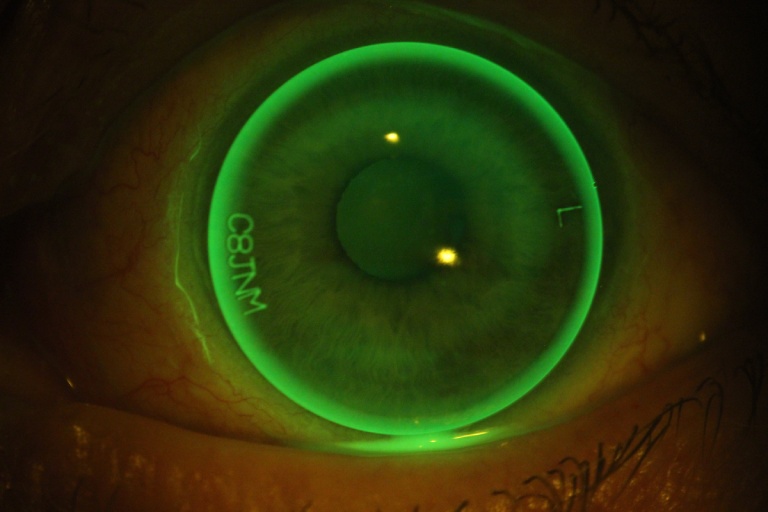
Rigid gas permeable contact lenses, also called RGP lenses, are smaller firm lenses that hold their shape on the eye. They can provide sharp optics, especially for higher prescriptions or eyes where soft lenses do not give clear enough vision.
RGP lenses may suit:
RGP lenses can take longer to adapt to than soft lenses. They require careful fitting and aftercare.
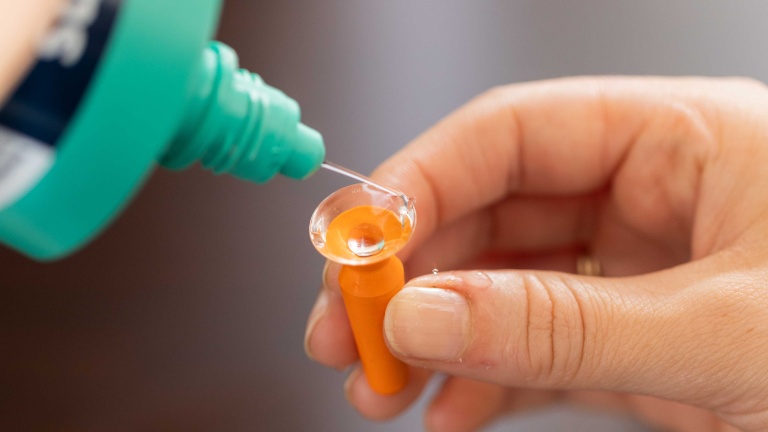
Scleral lenses are larger rigid lenses that vault over the cornea and rest on the white part of the eye. A fluid reservoir sits between the lens and the cornea, which can improve comfort and optics in selected patients.
Scleral lenses are not usually needed for simple myopia, but they can be useful for people with:
Scleral lenses can provide stable vision and good comfort in complex eyes because they do not rest directly on the cornea.7
Scleral Contact Lens Fitting and CareSome children and teenagers are excellent contact lens candidates. Contact lenses can help with sport, confidence, comfort and lifestyle.
Children can safely wear contact lenses when they have the right maturity, hygiene, training and follow-up. Studies on paediatric contact lens wear show that children can successfully handle and wear contact lenses with appropriate clinical support.8
For children with progressive myopia, we may also discuss myopia control contact lenses. These include Ortho-K and specific soft myopia control lenses. Several clinical trials have shown that selected contact lens designs can slow myopia progression and axial elongation compared with standard correction.6,9,10

Contact lenses are medical devices. They can be safe and effective when fitted correctly and cared for properly.
Safe contact lens wear depends on:
Correct lens fit
Microbial keratitis is uncommon, but it can be serious. The risk varies with lens type, wearing schedule and hygiene habits.3 Overnight lens wear carries a higher risk than daily wear, so Ortho-K requires careful instruction and regular review.11
A contact lens assessment may include:
Corneal topography maps the shape of the front surface of the eye. It is especially useful for Ortho-K, rigid lenses, scleral lenses, high prescriptions and irregular corneas.
Corneal TopographyThere is no single best contact lens for every person with myopia.
Daily disposable soft lenses may suit people who want convenience.
Monthly soft lenses may suit regular wearers who need a broader prescription range.
Toric lenses may suit people with myopia and astigmatism.
Multifocal lenses may suit myopic adults who also need help with reading.
Ortho-K may suit people who want clear daytime vision without glasses or daytime contact lenses.
RGP lenses may suit people who want sharp optics and have prescriptions that do not work well in soft lenses.
Scleral lenses may suit people with high or complex prescriptions, irregular corneas or dry eye.
At Innovative Eye Care, we recommend lenses based on your eyes, not just your prescription.
If you are short-sighted and want to explore contact lenses, we can help you compare your options.
Book a contact lens assessment at Innovative Eye Care in Adelaide or Henley Beach.
Book your appointment now for personalised eye care tailored just for you.