Scleral Contact Lenses Adelaide

Clearer, more stable vision can still be possible when glasses or standard contact lenses are no longer enough. Scleral contact lenses are individually designed rigid lenses that vault over the cornea and rest on the sclera, the white part of the eye. The space beneath the lens is filled with sterile, preservative-free saline, creating a smooth optical surface and a fluid reservoir over the cornea.1

At Innovative Eye Care, we fit custom scleral lenses at our Adelaide and Henley Beach practices. They may help people with keratoconus, corneal grafts, irregular corneas, complex prescriptions and selected forms of dry eye disease. Our optometrists use detailed corneal and scleral imaging to design each lens around the shape, health and visual needs of your eyes.

Book a scleral contact lens assessment to find out whether this option may suit you.

Book a scleral contact lens assessment
Scleral contact lens being placed onto the eye with an insertion tool
Children drawing and learning together in a classroom

What Are Scleral Contact Lenses?

Scleral lenses are larger than conventional corneal rigid gas permeable lenses, often called RGP lenses. A corneal RGP sits on the cornea and moves with each blink. A scleral lens is designed to bridge over the cornea and land on the less sensitive scleral tissue. Its larger diameter can provide a stable lens position and reduce interaction between the eyelids and the lens edge.1

‍

The lens is filled with sterile, preservative-free saline before insertion. Once on the eye, this fluid layer helps neutralise optical distortion from an irregular cornea. It can also protect and hydrate the corneal surface during wear in selected patients with ocular surface disease.1,2

‍

Lens type is only one part of the decision. Your optometrist will recommend the most suitable option after assessing your corneal shape, prescription, tear film, eye health, handling ability and daily visual needs. Learn more about our broader contact lens fitting process.

Who May Benefit from Scleral Lenses?

  • Age-appropriate vision testing
  • Prescription assessment
  • Binocular vision and focusing testing
  • Eye movement testing
  • Eye health examination
  • Myopia risk review
  • Advice for school, reading, screens and sport
  • Clear recommendations for glasses, monitoring or treatment
Scleral contact lens fitted on an eye with pellucid marginal degeneration

Keratoconus and Pellucid Marginal Degeneration

Keratoconus and pellucid marginal degeneration change the shape of the clear front surface of the eye. This can cause blurred or distorted vision, glare and ghost images that glasses may not fully correct. Scleral lenses create a smooth focusing surface over the eye, helping provide clearer and more stable vision.1 For some people with severe keratoconus, they may also delay or reduce the need for a corneal transplant.3 Scleral lenses improve vision but do not prevent keratoconus from worsening, so regular keratoconus monitoring remains important.

‍

Read more about the full range of contact lenses for keratoconus, including corneal RGP, hybrid, custom soft and scleral designs.
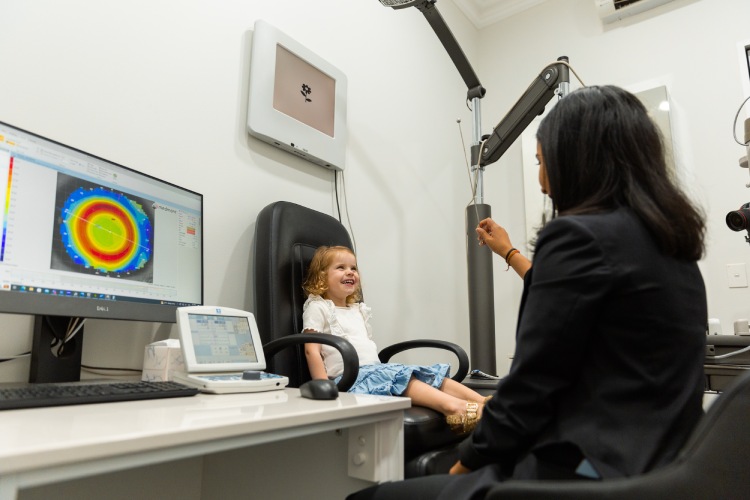
Optometrist assessing a young child’s eye movements and coordination during an eye test

Corneal Grafts and Other Irregular Corneas

After a corneal graft, eye injury or corneal surgery, the surface of the eye may have an uneven shape. This can make vision blurry or distorted, even with glasses. Scleral lenses sit over the cornea without touching it, creating a smooth surface that can provide clearer and more stable vision. Careful fitting and regular reviews help protect the health of the cornea and graft.4 Learn more about corneal graft care.
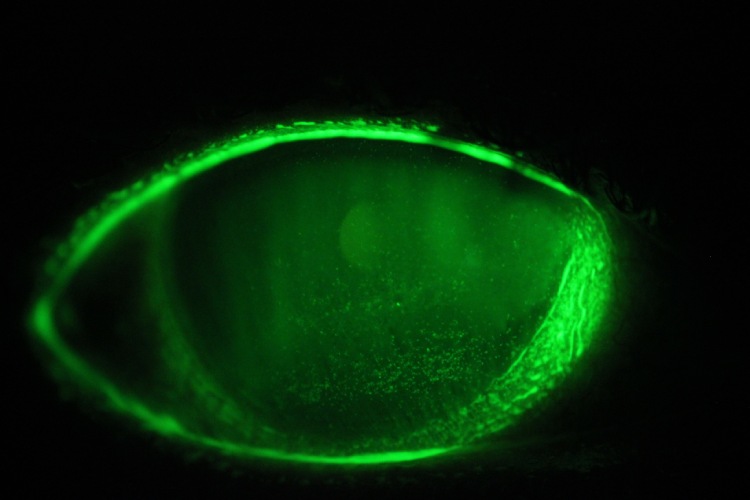
Fluorescein image of a scleral lens fitted on an eye with dry eye disease

Dry Eye and Ocular Surface Disease

For some people with moderate to severe dry eye, scleral lenses can protect the eye’s surface and keep it hydrated throughout the day. The liquid held beneath the lens creates a moisture layer over the cornea, which may improve comfort and make everyday activities easier.5 Scleral lenses are usually considered when other dry eye treatments have not provided enough relief.2,6 Explore our dry eye conditions and treatment options.
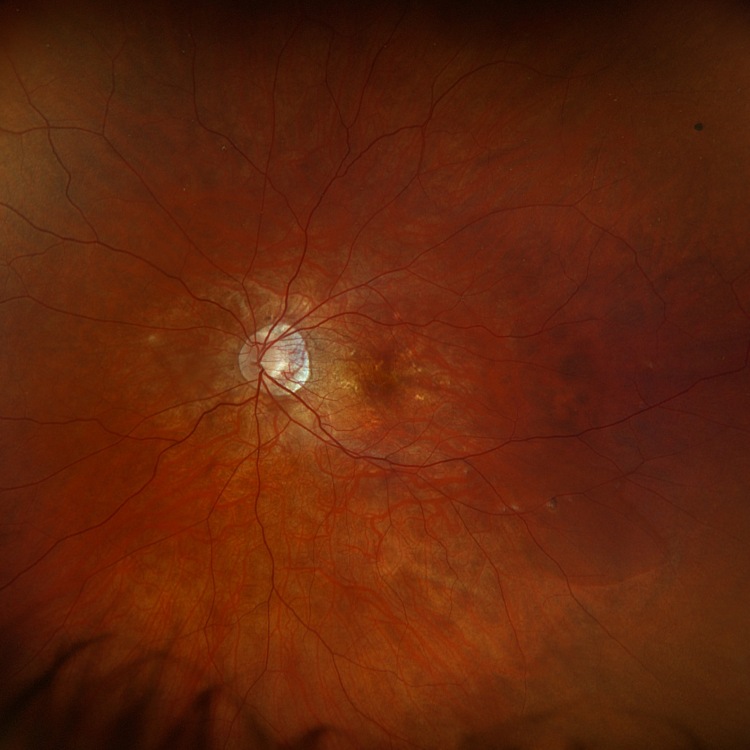
Wide-field retinal image used to monitor eye health in a person with high myopia

High or Complex Prescriptions

Scleral lenses can correct myopia, hyperopia and astigmatism. Their stable position can be useful when the prescription is high, the cornea is irregular, or conventional contact lenses rotate or move too much. Some designs can also include multifocal optics or more advanced correction for higher-order aberrations when clinically appropriate.1

Potential Benefits of Scleral Contact Lenses

  • Clearer vision when an irregular cornea cannot be fully corrected with glasses or standard soft lenses.
  • Stable vision from a large-diameter lens designed to rest on the sclera.
  • Good comfort for many patients because the lens vaults over the sensitive cornea.
  • A fluid reservoir that can protect and hydrate the corneal surface during wear.
  • A custom design that can account for asymmetry in the cornea and sclera.
  • An option for some patients who have struggled with comfort, movement or vision in corneal RGP lenses.

The result varies between patients. Corneal scarring, retinal or optic nerve disease, severe ocular surface disease and other eye conditions may limit the final vision. Your assessment helps establish realistic expectations before a lens is ordered.
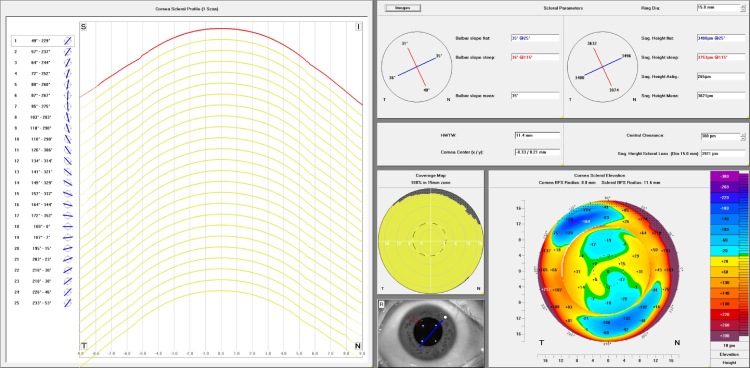
Cornea scleral profile scan and elevation map captured using the Pentacam AXL Wave

How We Design and Fit Scleral Lenses

Scleral lens fitting is more detailed than a standard contact lens fitting. Lens diameter, corneal clearance, landing alignment, edge profile, material, thickness and prescription all influence comfort, vision and eye health. Modern imaging can improve the starting design and guide later refinements (Barnett et al., 2021).

  1. Comprehensive assessment: We assess your vision, prescription, corneal health, tear film, eyelids, previous lens experience and the tasks that matter to you.
  2. Corneal and scleral mapping: We use corneal topography, corneal tomography and corneo-scleral profilometry to measure the shape of the eye. These measurements help us design the lens around your anatomy.
  3. Trial lens or measurement-led design: Depending on your eye, we may assess diagnostic lenses or use detailed scan data to select a precise starting design.
  4. On-eye imaging: Anterior OCT allows us to view the lens in cross-section and assess central and limbal clearance, landing alignment and changes that occur after the lens settles.
  5. Optical refinement: We refine the prescription over the lens. Wavefront aberrometry may be used to measure complex optical distortions and guide advanced optics in selected cases.
  6. Handling and care training: We teach you how to fill, insert, remove, clean and disinfect your lenses safely. You will practise these steps before taking the lenses home.
  7. Follow-up and adjustment: We review your vision, comfort, wearing time, lens condition and eye health. Custom refinements may be needed as the lens settles or your eyes change.

Read more about corneal topography, corneal tomography, anterior imaging and OCT and wavefront aberrometry.
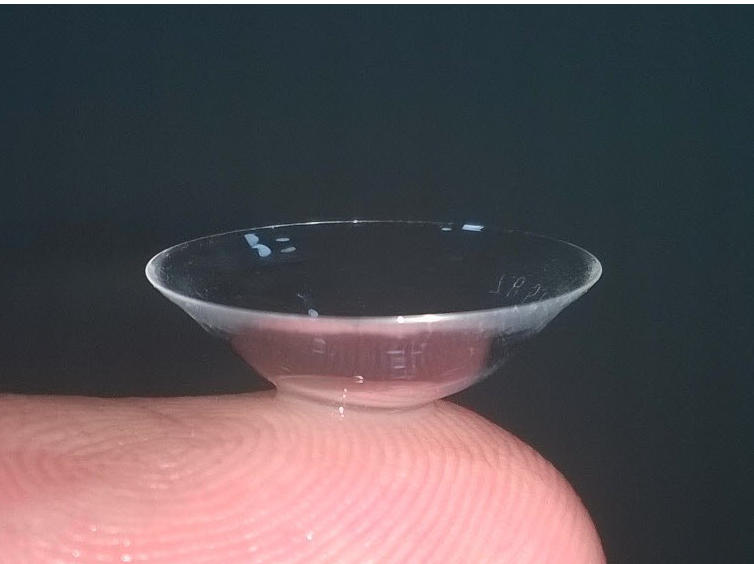
Close-up of a scleral contact lens balanced on a fingertip

Our Custom Scleral Lens Technology

At Innovative Eye Care, we use EyeSpace design software and detailed scans of the cornea and the white part of the eye to create a scleral lens that matches your individual eye shape. These measurements allow us to adjust different areas of the lens to improve comfort, stability and vision.

Technology helps us create an accurate starting design, but every lens still needs to be carefully assessed on your eye. We check how the lens sits, how well it clears the cornea and how your eye responds during wear. Further adjustments can then be made to improve the fit, comfort or prescription. Regular reviews help us maintain clear vision and protect your eye health.
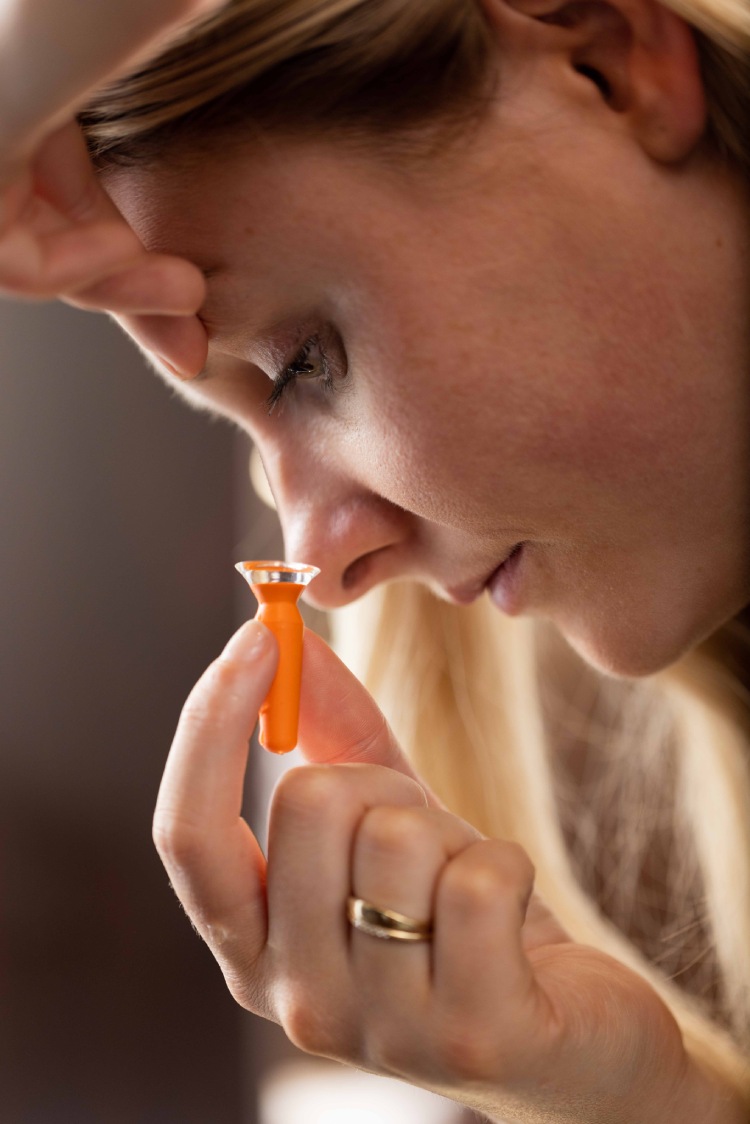
Person preparing to insert a scleral contact lens using an orange insertion plunger

What to Expect When You Start Wearing Scleral Lenses

Scleral lenses are larger than standard contact lenses, but most people become comfortable handling them with practice. Before inserting the lens, you fill it with sterile, preservative-free saline. This liquid sits between the lens and your eye, helping keep the eye comfortable and ensuring clear vision.

‍

You may need to build up your wearing time while your eyes adjust. It is normal to notice the lenses at first. If your vision becomes cloudy, you see bubbles, or the lenses become uncomfortable, contact us for a review. We can often improve these issues by adjusting your lens, filling solution or care routine.1

‍

Use our step-by-step scleral lens care and handling guide after your fitting appointment.

Scleral contact lens being rinsed with solution while held on an insertion plunger

Are Scleral Lenses Safe?

Scleral lenses are safe for most people when they fit well, are cared for correctly and are checked regularly. Problems are uncommon, but can include redness, discomfort, cloudy vision, swelling or infection. Regular reviews allow us to identify small changes before they affect your comfort or eye health. This is especially important if you have a corneal graft or another eye condition.1,4

‍

  • Never sleep in your scleral lenses unless your eye specialist has specifically advised you to.
  • Keep tap water away from your lenses, storage case and filling solution.
  • Only use the cleaning and filling products recommended by your optometrist.
  • Remove your lens and contact us if you develop ongoing pain, redness, light sensitivity, discharge or sudden blurred vision.
  • Attend your scheduled reviews, even when your lenses feel comfortable and your vision is clear.
Exterior of Innovative Eye Care clinic in Adelaide

Why Choose Innovative Eye Care for Scleral Lenses?

  • A clinical focus on keratoconus, corneal disease and specialty contact lenses.
  • Scleral lens fitting available at our Adelaide and Henley Beach practices.
  • Advanced measurement with corneal topography, tomography, corneo-scleral profilometry, anterior OCT and wavefront aberrometry.
  • Custom lens design using EyeSpace technology and detailed on-eye assessment.
  • Experience managing complex corneas, including keratoconus, pellucid marginal degeneration and corneal grafts.
  • Structured handling education, aftercare and lens refinement.

Book a Scleral Contact Lens Assessment

If glasses no longer give you clear vision, your current contact lenses feel uncomfortable or unstable, or dry eye is limiting your daily activities despite treatment, a scleral lens assessment may help clarify your options.

Contact Innovative Eye Care to book at our Adelaide or Henley Beach practice. We will assess your eye shape, eye health, prescription and visual needs before recommending the most suitable lens approach.

Frequently Asked Questions

What are scleral contact lenses used for?
Scleral lenses can improve vision when the clear front surface of the eye has an uneven shape. This may occur with keratoconus, pellucid marginal degeneration, a corneal graft, an eye injury or previous surgery. They may also help some people with severe dry eye or complex prescriptions (Harthan et al., 2018; Barnett et al., 2021).
Are scleral lenses better than RGP lenses?
It depends on your eyes. Smaller rigid lenses, often called RGP lenses, work well for many people. Scleral lenses may be more comfortable and stable if the eye has a very uneven shape or an RGP lens moves too much. Your optometrist will recommend the lens that provides the best balance of vision, comfort and eye health.
Are scleral contact lenses comfortable?
Many people find scleral lenses comfortable because they sit on the white part of the eye and do not touch the sensitive cornea. The liquid beneath the lens also helps cushion the eye. Comfort depends on the lens fit, your tear film and how long you wear the lenses.1
Can scleral lenses help keratoconus?
Yes. Keratoconus changes the shape of the cornea, which can cause blurred or distorted vision that glasses may not fully correct. A scleral lens creates a smooth focusing surface over the eye, helping provide clearer and more stable vision.

Scleral lenses do not stop keratoconus from worsening. You will still need regular eye scans. If changes are detected, your optometrist may refer you to an ophthalmologist to discuss corneal cross-linking.
Can scleral lenses help dry eye?
They may help some people with moderate to severe dry eye, particularly when other treatments have not provided enough relief. The liquid held beneath the lens keeps the cornea covered and hydrated throughout the day. This can protect the eye’s surface and improve comfort.2,7
Can I sleep in scleral lenses?
No. Scleral lenses are designed to be removed before sleeping. Sleeping in them reduces the amount of oxygen reaching the cornea and does not allow the lenses to be cleaned and disinfected each day 1
How long does a scleral lens fitting take?
The fitting process usually involves several appointments. Your first appointment includes a detailed eye examination, measurements and a lens assessment. Once your lenses are ready, we check their fit and vision and teach you how to insert, remove and care for them.

Follow-up appointments allow us to check your eye health and make any necessary changes. The number of visits depends on the shape of your eyes and how they respond to the lenses.
How long do scleral lenses last?
Scleral lenses need to be replaced over time. How long they last depends on their condition, your prescription and whether the shape of your eyes changes.

Scratches, surface deposits or changes in comfort and vision may mean you need new lenses sooner. Your optometrist will check your lenses during your regular reviews and recommend when they should be replaced.
Why does my scleral lens become foggy?
Cloudy or foggy vision can occur when small particles collect in the liquid beneath the lens. Dry eye, the lens fit, your filling solution and your lens care products can all contribute.
‍
You should arrange a review if fogging happens regularly. We can often improve the problem by adjusting the lens, treating the eye’s surface or changing your care routine.
Where can I get scleral contact lenses in Adelaide?
Innovative Eye Care provides custom scleral contact lens fittings at our Adelaide and Henley Beach practices.

You can visit us at 300 Wakefield Street, Adelaide, or 330 Seaview Road, Henley Beach. Book a scleral contact lens assessment to find out whether they may be suitable for you.

References

  1. Barnett M, Courey C, Fadel D, et al. CLEAR - Scleral lenses. Contact Lens and Anterior Eye. 2021;44(2):270-288. doi:10.1016/j.clae.2021.02.001
  2. Shorter E, Harthan J, Nau CB, et al. Scleral Lenses in the Management of Corneal Irregularity and Ocular Surface Disease. Eye Contact Lens. 2018;44(6):372-378. doi:10.1097/ICL.0000000000000436
  3. Koppen C, Kreps EO, Anthonissen L, Van Hoey M, Dhubhghaill SN, Vermeulen L. Scleral Lenses Reduce the Need for Corneal Transplants in Severe Keratoconus. American Journal of Ophthalmology. 2018;185:43-47. doi:10.1016/j.ajo.2017.10.022
  4. Khosravi Mirzaei S, Feizi S, Hatami F, Hatami F, Moshtaghion SM. Contact lenses for visual rehabilitation in post-keratoplasty eyes: A systematic review. Cont Lens Anterior Eye. 2025;48(3):102374. doi:10.1016/j.clae.2025.102374
  5. Schornack M, Pyle J, Patel S. Scleral lenses in the management of ocular surface disease. Ophthalmology. 2014;121(7):1398-1405. doi:10.1016/j.ophtha.2014.01.028
  6. Harthan JS, Shorter E. Therapeutic uses of scleral contact lenses for ocular surface disease: patient selection and special considerations. OPTO. 2018;Volume 10:65-74. doi:10.2147/OPTO.S144357
  7. Shorter E, Harthan J, Nau CB, et al. Scleral Lenses in the Management of Corneal Irregularity and Ocular Surface Disease. Eye & Contact Lens: Science & Clinical Practice. 2018;44(6):372-378. doi:10.1097/ICL.0000000000000436

Speak to our friendly team today

Book your appointment now for personalised eye care tailored just for you.