

Book Online
Please choose which location you would like to make an appointment for.
Blurred vision, distorted vision, glare, halos, and frequent prescription changes can be signs of keratoconus.
At Innovative Eye Care, we provide advanced keratoconus diagnosis in Adelaide and Henley Beach using detailed corneal imaging and evidence-based clinical assessment. Our optometrists assess the shape, thickness, strength, and optical quality of your cornea to detect keratoconus early and monitor changes over time.

Keratoconus is a progressive condition that affects the cornea, the clear front surface of the eye. In keratoconus, the cornea becomes thinner and more irregular. It can bulge into a cone-like shape, which makes light focus unevenly inside the eye. This can cause blurred, distorted vision that may not improve fully with standard glasses.1–3
Keratoconus often starts during the teenage years or early adulthood. It can continue changing into the 30s or 40s, so early diagnosis and regular monitoring matter.1,2,4,5
Book an assessment if you notice any of the following.6,7
Early keratoconus can be hard to detect with a standard eye test alone. Advanced corneal imaging gives your optometrist a much clearer view of subtle changes in the cornea.2,7,8
Keratoconus diagnosis starts with a detailed eye examination and corneal imaging.9,10
At Innovative Eye Care, your assessment may include:
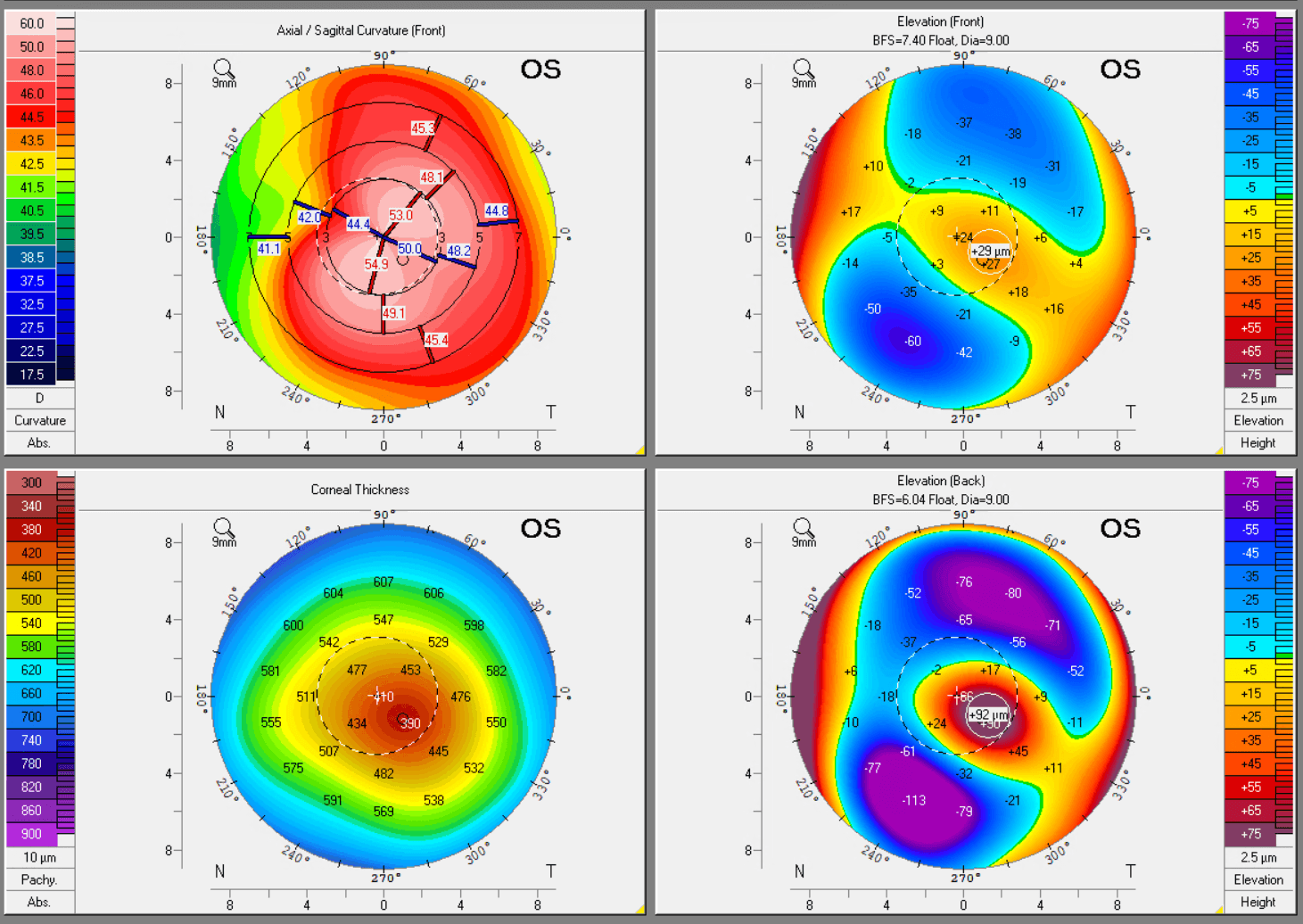
This creates a 3D map of the cornea, including the front and back surfaces. It helps detect early keratoconus and measure corneal thickness.5,9,11,12
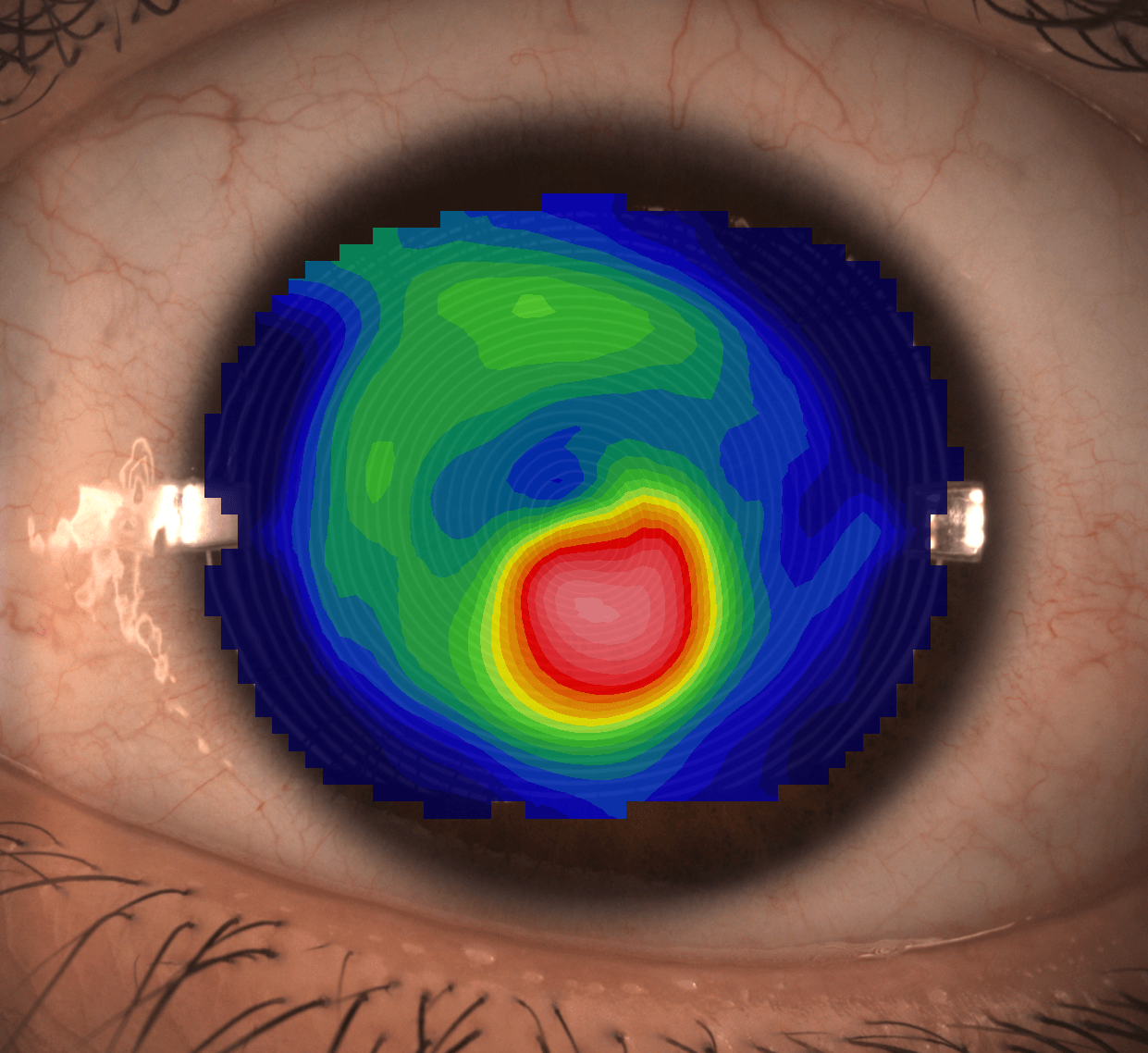
This maps the front surface of the cornea. It helps identify irregular astigmatism and corneal steepening.9
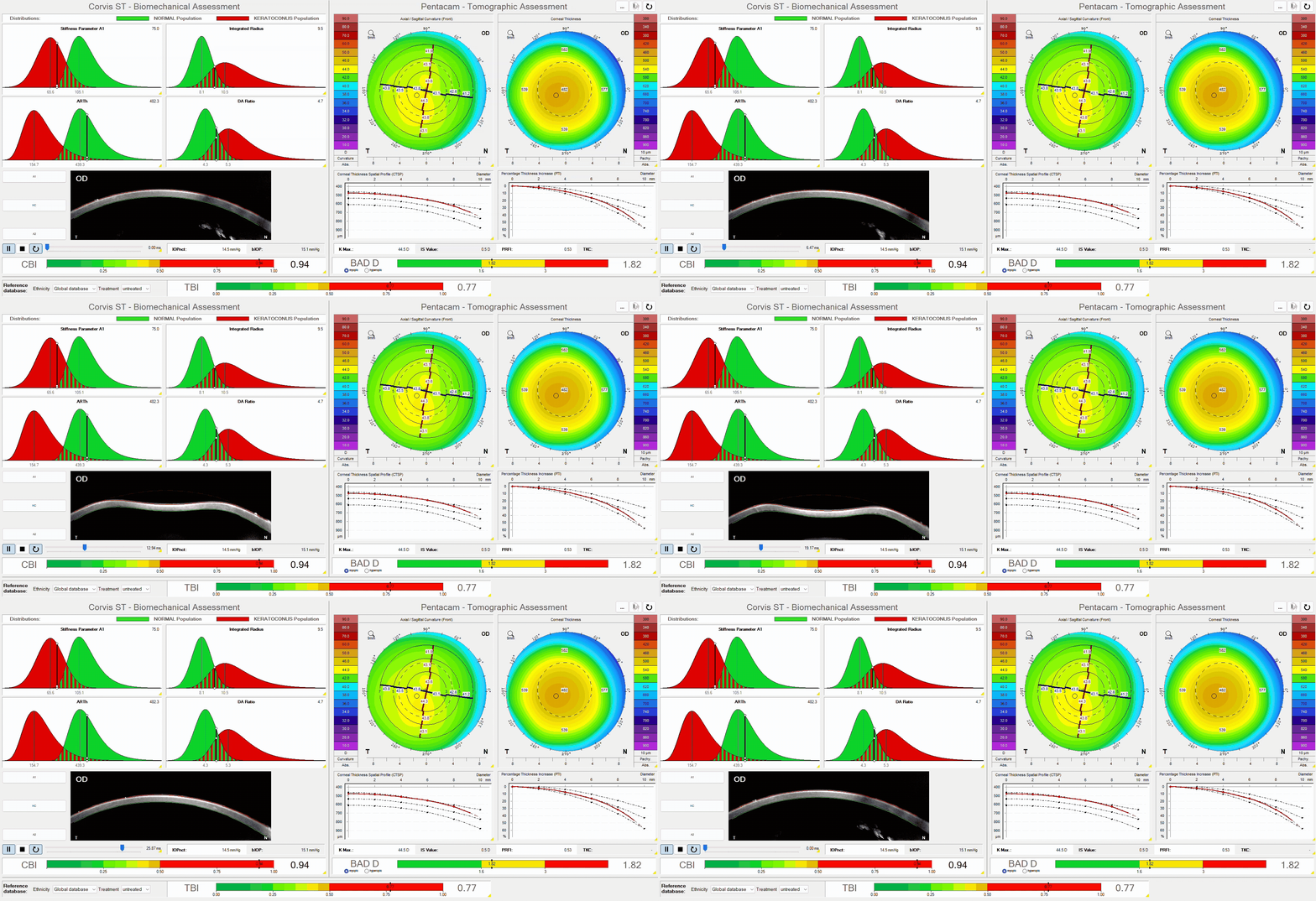
This measures how the cornea responds to pressure. It can help identify corneas that may be structurally weaker.10,11,13
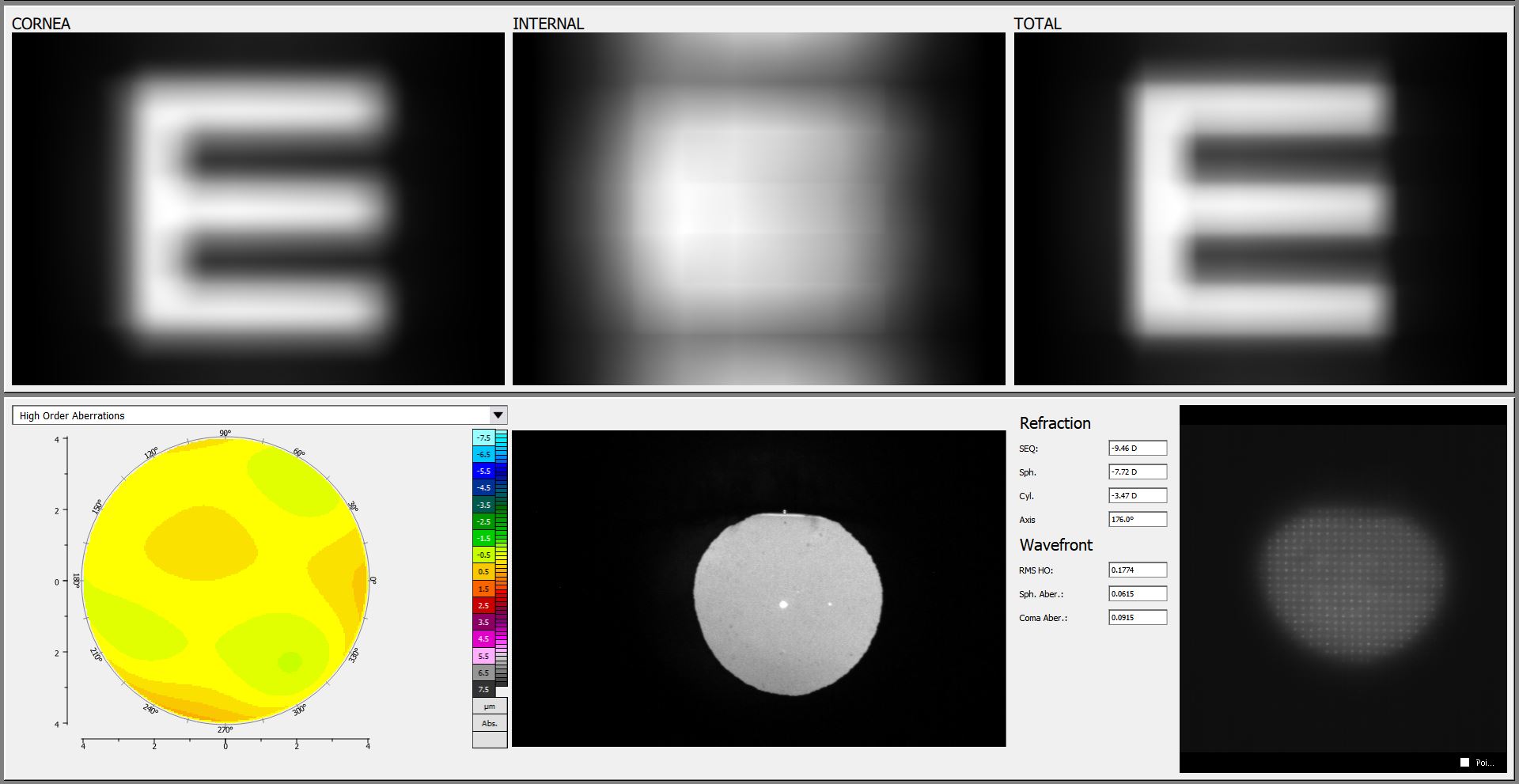
This measures higher-order optical distortions that can cause glare, halos, ghosting, and reduced clarity.7
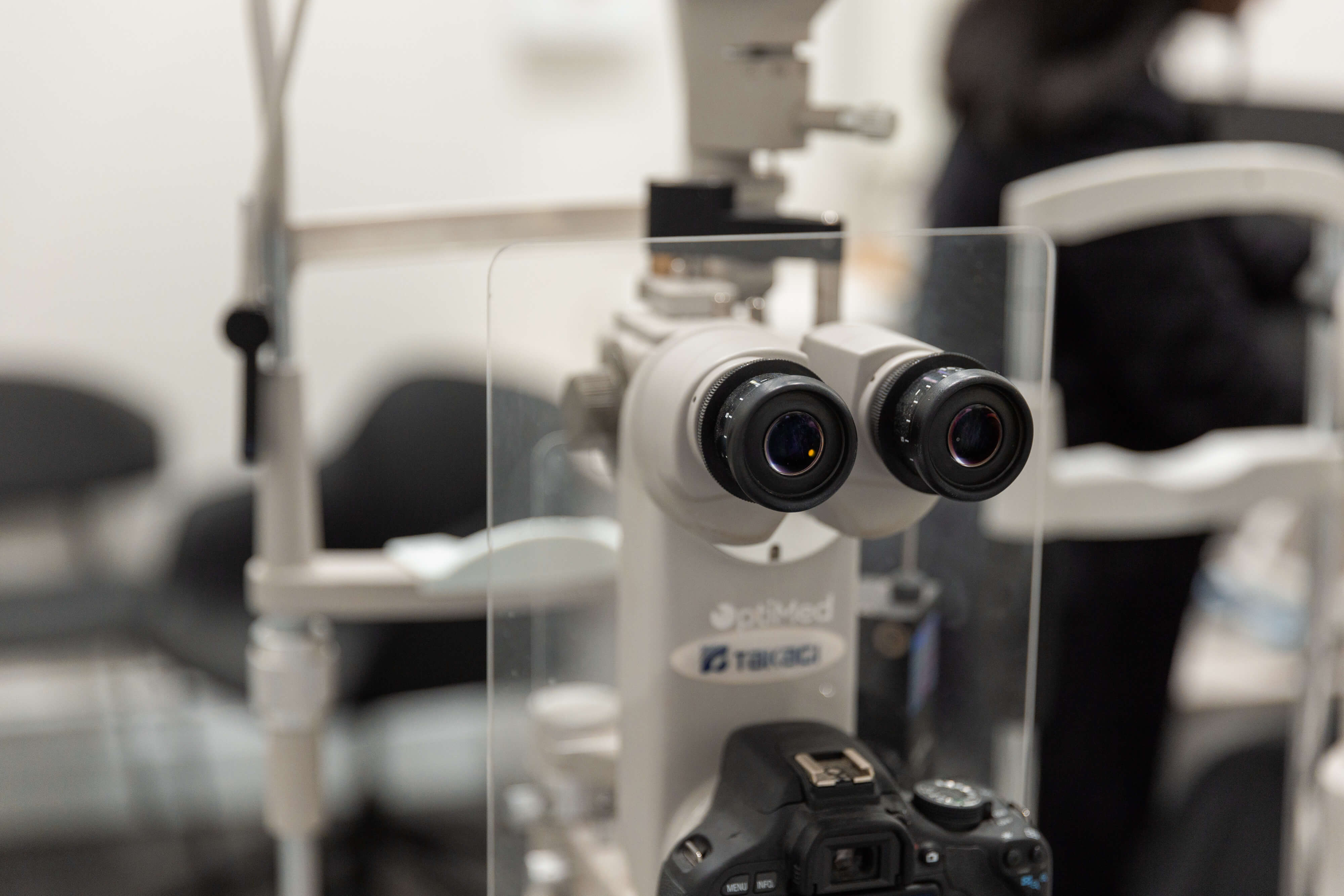
This allows your optometrist to assess the corneal surface and look for clinical signs of keratoconus.
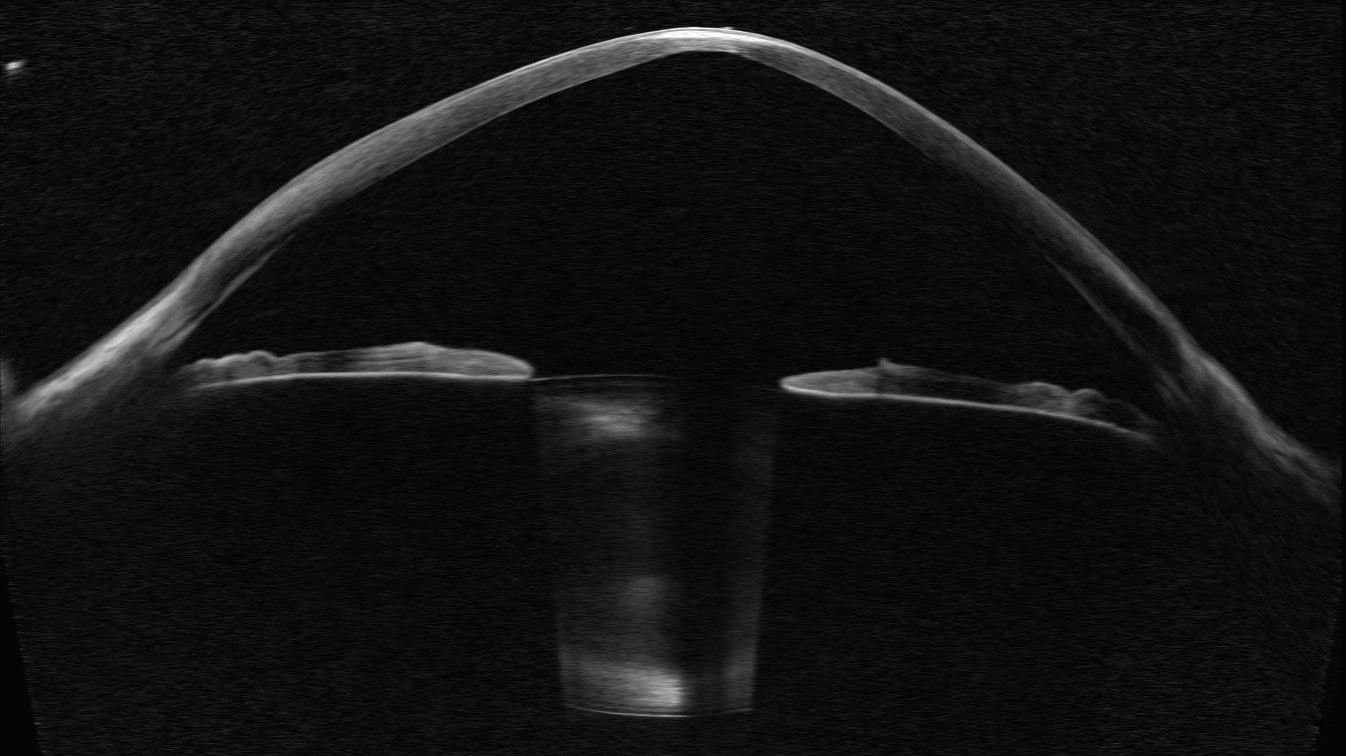
This provides cross-sectional imaging of the cornea and can help assess corneal shape, thickness, and contact lens fitting.

Early diagnosis gives you more options.
Keratoconus can progress before symptoms feel severe.7,10,14 By the time vision feels noticeably distorted, the cornea may already have changed significantly.
A diagnosis helps your optometrist:
Corneal collagen cross-linking is most effective when progressive keratoconus is detected early.5,14 Your optometrist can refer you to an ophthalmologist if your results suggest progression or higher risk.
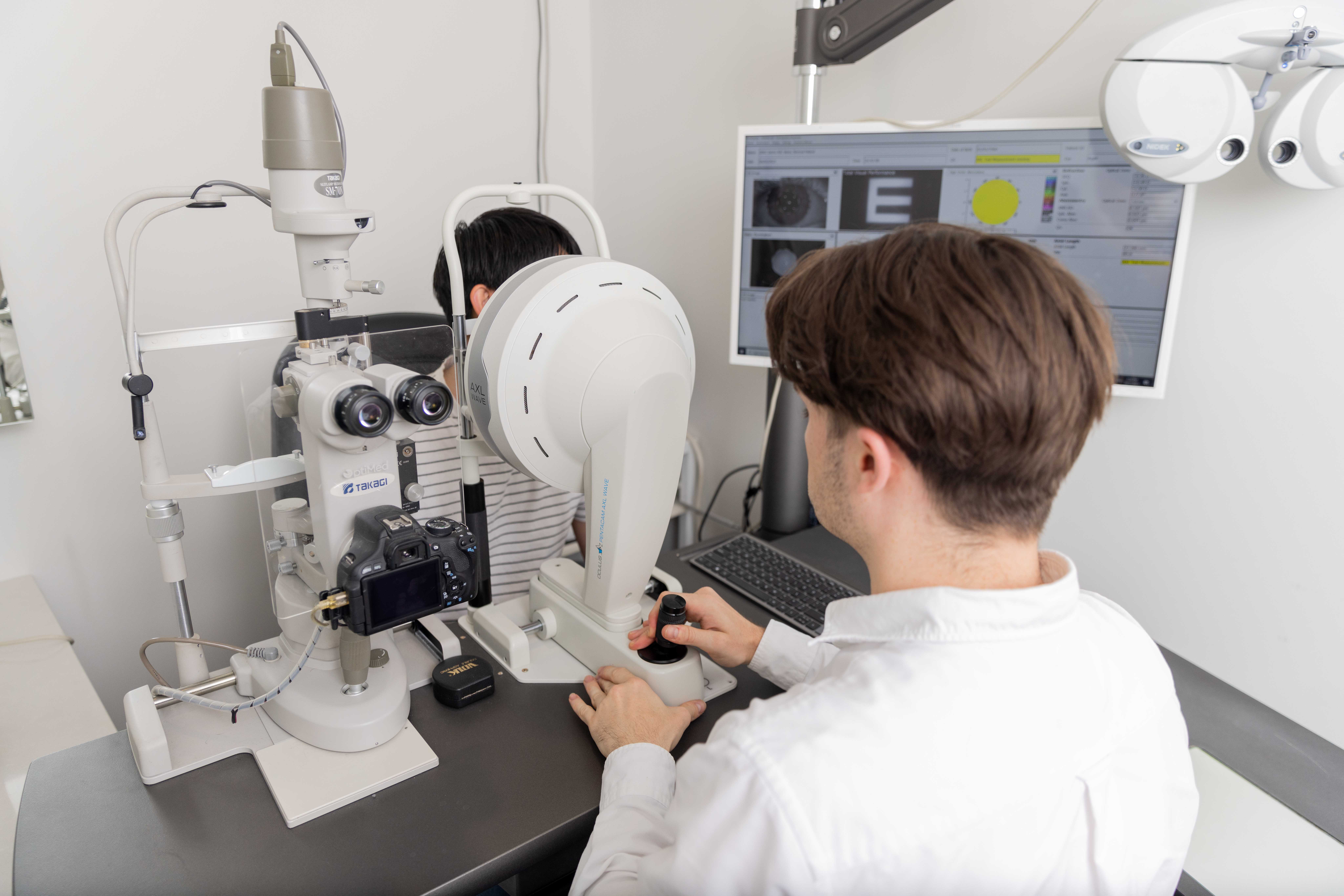
Your keratoconus assessment is designed to understand both your vision and your corneal health.
Your visit may include:
You will be told whether your results suggest keratoconus, whether further monitoring is needed, and what the next step should be.

In early keratoconus, glasses or soft contact lenses may still provide useful vision.
As the cornea becomes more irregular, glasses often become less effective. Specialty contact lenses can help by creating a smoother optical surface over the cornea.
Options may include.5,15
Scleral lenses are often used for moderate to advanced keratoconus.16 They vault over the cornea and rest on the white part of the eye, which can improve comfort and vision for irregular corneas.
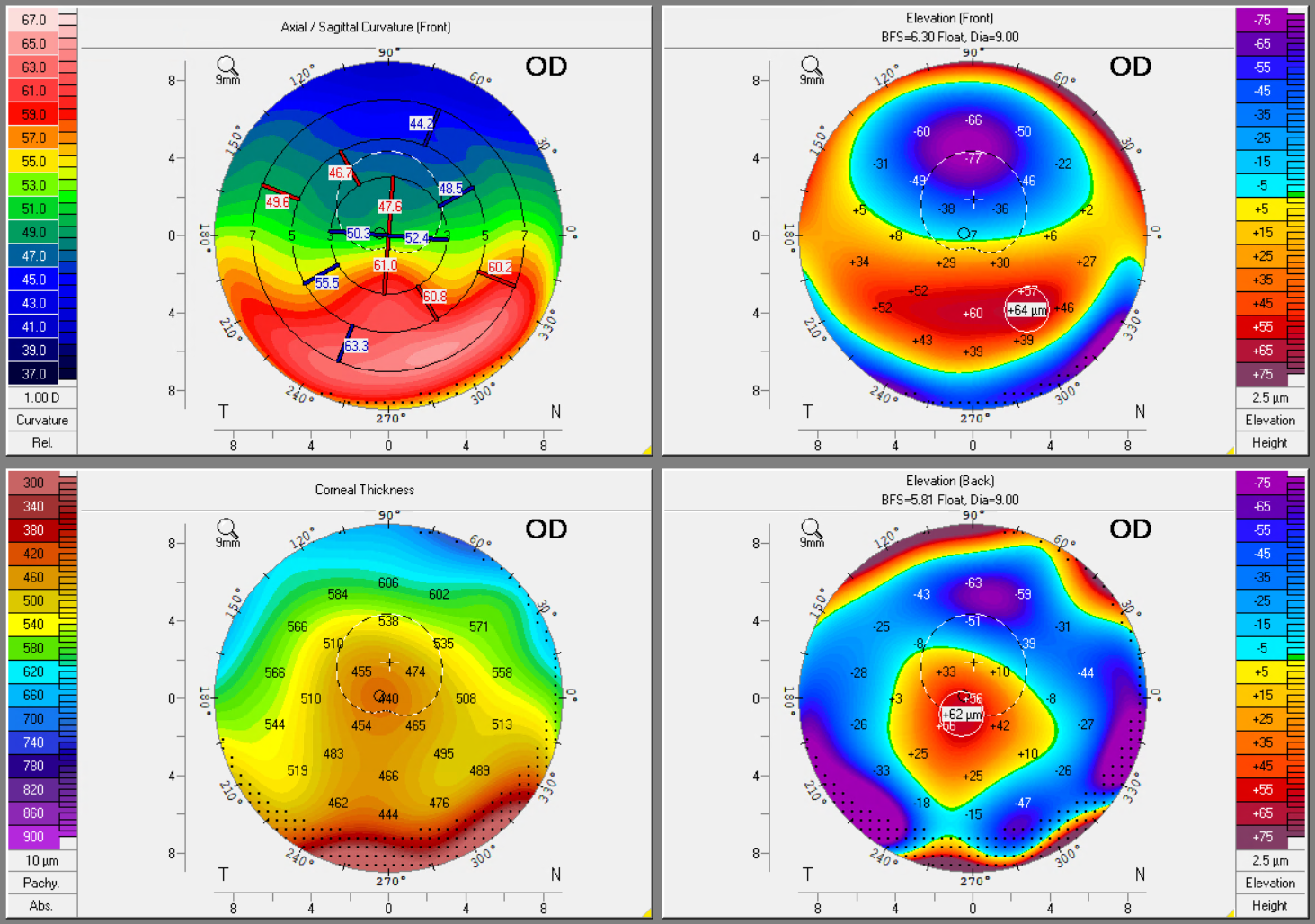
Pellucid marginal degeneration, or PMD, is another corneal thinning condition that can look similar to keratoconus. PMD usually affects the lower cornea and can cause high against-the-rule astigmatism.17
Accurate diagnosis is important because the contact lens fitting and management plan may differ. Advanced corneal imaging helps your optometrist distinguish between these conditions.
.jpg)
Keratoconus diagnosis and management is a core clinical focus at Innovative Eye Care.
Our team uses advanced imaging technology to assess corneal shape, thickness, biomechanics, and optical quality. We also have extensive experience fitting specialty contact lenses for keratoconus and other irregular corneal conditions.
Principal optometrist Lachlan Hoy has written a textbook chapter on keratoconus and regularly contributes to education in specialty contact lens practice.

If you have blurred vision, increasing astigmatism, frequent prescription changes, night glare, or a family history of keratoconus, book a keratoconus assessment.
Innovative Eye Care provides keratoconus diagnosis and monitoring at our Adelaide and Henley Beach practices.
Book your appointment now for personalised eye care tailored just for you.