

Book Online
Please choose which location you would like to make an appointment for.
Long-sightedness, also called hyperopia or farsightedness, is a common focusing condition. You may see clearly in the distance but struggle with reading, computer work or other close-up tasks. Some people with hyperopia see well at every distance but experience headaches or tired eyes because their eyes must work harder to keep things in focus.
At Innovative Eye Care, our optometrists assess long-sightedness in adults and children at our Adelaide and Henley Beach practices. We can recommend glasses, contact lenses or monitoring based on your prescription, symptoms and how your eyes work together.
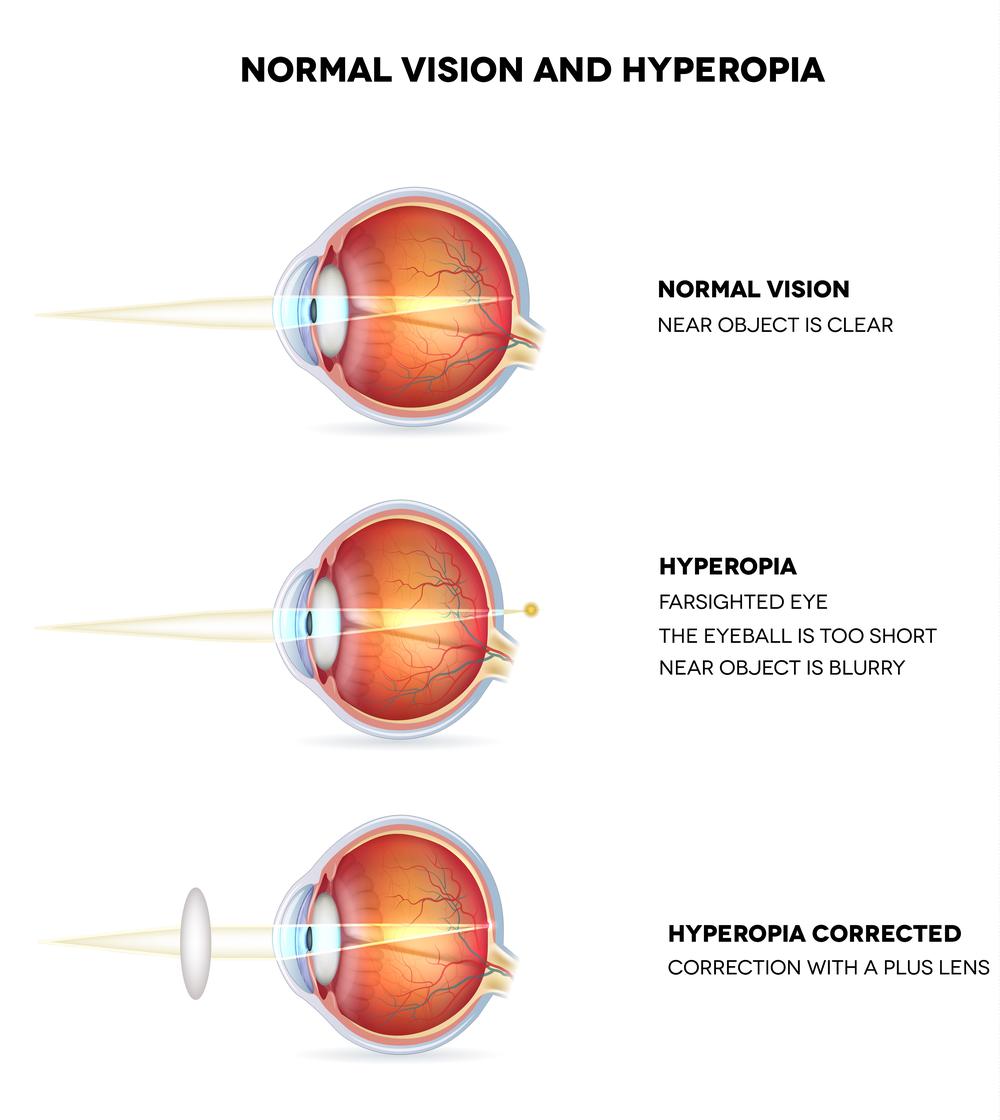
In a long-sighted eye, light would focus behind the retina when the eye is relaxed. This usually happens because the eye is relatively short or its focusing power is too weak. The eye can sometimes compensate by changing the shape of its natural lens, a process called accommodation. That extra focusing effort can make sustained near work uncomfortable.

Symptoms vary with age and the amount of hyperopia. You may notice blurred vision when reading, sore or tired eyes after close work, headaches, difficulty switching focus between distances, or needing more breaks from screens and books. With higher prescriptions, distance vision can also be blurry.
A child may not describe blurry vision. Instead, you may notice avoidance of reading, fatigue during schoolwork, an eye turning inwards or difficulty maintaining attention on close tasks. These symptoms can have several causes, so an eye examination matters more than symptoms alone.
Hyperopia is related to the eye’s length and optical power, and family history may play a role. A small amount of hyperopia is common in young children. As children grow, their eyes and prescriptions can change. Not everyone with a low prescription needs glasses.
An eye chart alone may not identify long-sightedness, particularly in younger people who can compensate by focusing. During a comprehensive eye test, we measure your prescription and check your vision, focusing ability, eye coordination and eye health. Children may need dilating eye drops to temporarily relax focusing so their full prescription can be measured accurately.1
Find out what happens during an eye examination at Innovative Eye Care.
Many children can compensate for mild hyperopia. However, higher amounts, a substantial difference between the eyes, or an associated eye turn can affect visual development. Significant uncorrected hyperopia can increase the risk of amblyopia (a lazy eye) or an inward eye turn called accommodative esotropia. Early assessment helps your optometrist decide whether glasses or further treatment is needed.1,2
Some children need glasses all day, while others may need a different approach. The decision depends on their age, prescription, eye alignment, vision and symptoms. A child with an inward eye turn should have a prompt comprehensive assessment.1,2
Learn more about our children’s eye tests and assessments for developing eyes.
No. A small amount of long-sightedness is common in childhood. The decision to prescribe depends on the child’s age, the amount of hyperopia, vision in each eye, eye alignment, symptoms and ability to see comfortably at near.
For some children with moderate hyperopia and normal vision and eye alignment, careful monitoring can be reasonable. Research has not established that every such child benefits from immediate glasses. However, a child with an inward eye turn, reduced vision or a lazy eye may need prompt treatment. Regular follow-up is essential when monitoring is chosen.4,5
You may be able to read an eye chart clearly while your eyes work harder than usual to stay focused. This is especially noticeable during prolonged reading, studying or screen use. Symptoms alone cannot confirm hyperopia, as dry eyes and difficulties coordinating the eyes can cause similar discomfort.
Having headaches does not automatically mean you need glasses. An eye examination can establish whether your prescription, focusing system or another issue is contributing.
Your optometrist checks how clearly you see, measures your prescription and assesses how well your eyes focus and work together. They also examine the health of your eyes.
For children, eye drops that temporarily relax the focusing muscles may be recommended. This is called cycloplegic refraction and can reveal long-sightedness that normal testing may underestimate. Your optometrist will explain whether it is suitable and what to expect.1

Prescription glasses reduce the effort needed to focus and can sharpen vision. Depending on your age and symptoms, you may need them for reading, screens or full-time wear. Children with an associated eye turn may need consistent full-time correction.2
Explore our spectacle lens options.
Soft contact lenses can correct many hyperopic prescriptions and may suit people who prefer not to wear glasses. Availability depends on the prescription and eye health. Our optometrists can assess lens suitability and explain safe wear and care.
Read more about contact lenses.
Some adults may be suitable for refractive surgery. Suitability depends on prescription stability, corneal measurements, age, eye health and the procedure available. Surgery does not prevent age-related near-focus changes, and not every hyperopic prescription can be treated safely. We can discuss whether a specialist assessment is appropriate.
Mild hyperopia without symptoms may only need routine review. If glasses are prescribed, we monitor comfort, vision and any change in prescription. Children may need more frequent review, especially when there are concerns about eye alignment or a lazy eye.
Hyperopia is generally represented by a plus (+) number on your glasses prescription, such as +1.50 or +3.00 dioptres (D). A larger plus number often means more long-sightedness, but symptoms and the need for glasses vary between people.
Your prescription may also include a cylinder (CYL) and axis for astigmatism. An ADD value usually indicates extra near focusing support, commonly prescribed for presbyopia. Your optometrist can explain how each number relates to your vision.
Hyperopia is a refractive error related to how the eye focuses light. Presbyopia is the gradual age-related loss of near focusing ability, usually noticed from the early to mid-40s. You can have both conditions, which may make near work difficult earlier or require a different glasses prescription.
Read our guide to presbyopia.
Arrange an appointment if reading or screen work causes recurring eyestrain, your child avoids near activities, or you notice a new inward eye turn. If a child has a constant or intermittent eye turn, arrange an assessment promptly rather than waiting for a routine review.
Sudden loss of vision, severe eye pain or a painful red eye are not typical symptoms of uncomplicated hyperopia and need urgent assessment.
If you or your child experience blurry vision, headaches or discomfort during close work, book a comprehensive eye test with Innovative Eye Care. Visit us at 300 Wakefield Street, Adelaide, or 330 Seaview Road, Henley Beach. Our team can explain your results and recommend the most suitable next steps.
Contact our team or book an appointment to arrange an assessment.
Book your appointment now for personalised eye care tailored just for you.